The Manufacturing Intelligence Revolution
Artificial intelligence and machine learning are reshaping how factories operate. From predicting equipment failures before they happen to inspecting every product on the line with superhuman consistency, purpose-built AI solutions are enabling a new class of manufacturing operations that are more efficient, more reliable, and more adaptive than anything possible with traditional methods.
The shift is driven by three converging trends: cameras and sensors have become cheap and ubiquitous, compute power for running ML models is available at the edge, and the algorithms themselves have matured to the point where they deliver reliable results in noisy, real-world industrial environments.
Computer Vision in Manufacturing
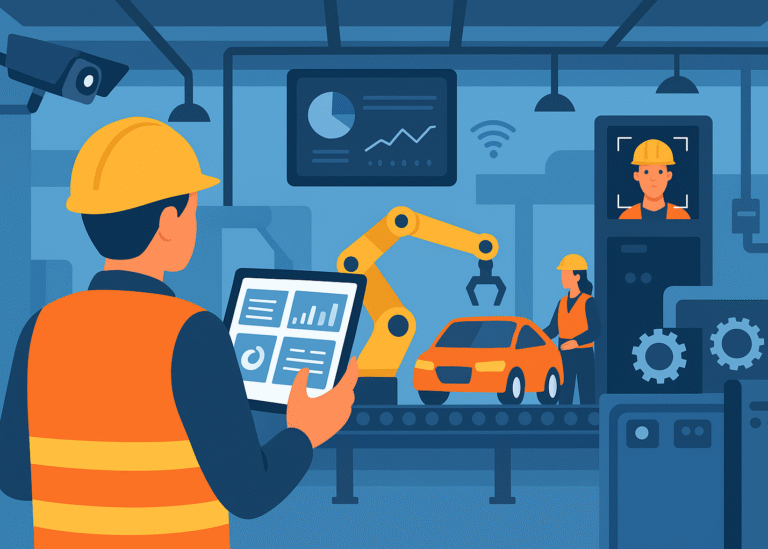
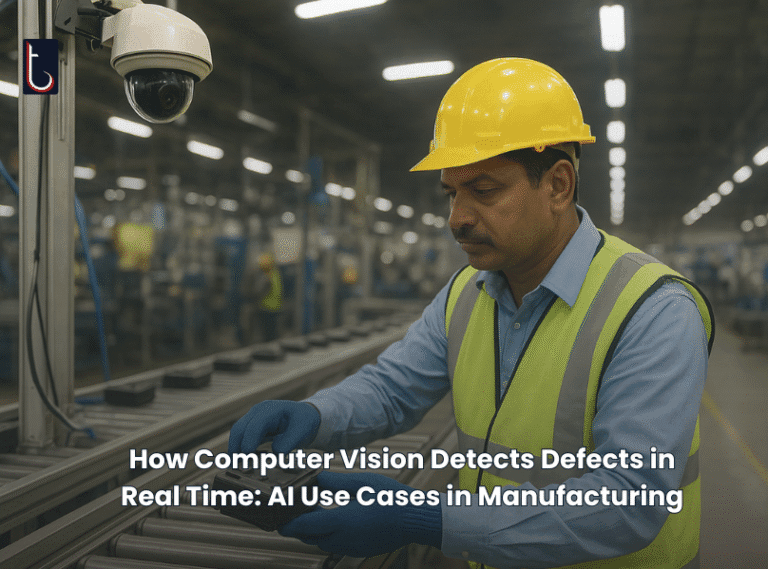
Computer vision is the most immediately impactful AI technology on the factory floor. Cameras paired with trained visual models can detect defects, verify assemblies, read labels, monitor processes, and track movement -- all in real time and at a scale that manual observation cannot match.
The technology works by training deep learning models on large datasets of labeled images specific to the manufacturing context. A model trained to detect surface scratches on metal parts, for example, learns from thousands of annotated images showing both acceptable and defective surfaces. Once deployed, the model processes live camera feeds and flags anomalies in milliseconds.
Predictive Maintenance
Unplanned equipment downtime is one of the most expensive problems in manufacturing. Traditional maintenance strategies -- either reactive (fix it when it breaks) or time-based (service it every N hours) -- are both wasteful. Reactive maintenance leads to costly unplanned stops. Time-based maintenance replaces components that may still have significant useful life.
ML-based predictive maintenance uses sensor data -- vibration, temperature, current draw, acoustic signatures -- to build models that predict when equipment is likely to fail. This allows maintenance to be scheduled during planned downtime windows, maximizing equipment utilization while minimizing the risk of unexpected breakdowns.
Automated Quality Inspection
Manual quality inspection is limited by human attention spans, fatigue, and subjectivity. Statistical sampling catches only a fraction of defects. AI-powered visual inspection examines every unit with consistent criteria, detecting surface flaws, dimensional variances, color inconsistencies, and assembly errors that human inspectors would miss.
The business case is straightforward: fewer escaped defects means fewer warranty claims, fewer returns, and higher customer satisfaction. The inspection data also feeds back into process improvement, identifying the root causes of recurring defect patterns.
Assembly Verification and Process Monitoring
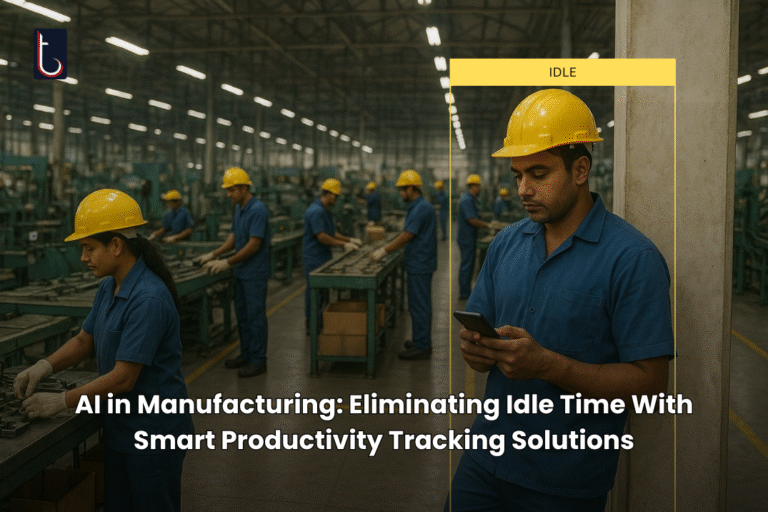
Complex assembly operations require workers to follow specific sequences, use the correct tools, and verify each step before proceeding. AI-powered monitoring ensures that every assembly step is completed correctly and in order. The system can detect when a step is skipped, when the wrong component is used, or when a tool is applied incorrectly.
This capability is particularly valuable in high-mix, low-volume manufacturing where frequent changeovers increase the risk of operator error. The AI system adapts to different product configurations and provides real-time guidance to operators, reducing errors and accelerating the learning curve for new products.
Business Impact
Manufacturers implementing AI and ML are seeing measurable improvements across key operational metrics. Defect rates decline as visual inspection catches issues that manual methods miss. Equipment uptime increases as predictive maintenance prevents unplanned stops. Throughput improves as process monitoring identifies and eliminates bottlenecks. Labor productivity rises as workers are freed from routine inspection tasks to focus on higher-value activities.
The compound effect of these improvements is significant. Factories that have deployed AI across multiple use cases report overall equipment effectiveness improvements, meaningful reductions in cost of quality, and faster time-to-market for new products. See how these results are playing out across our manufacturing industry practice.
Getting Started with AI in Manufacturing
The most successful AI implementations in manufacturing start small and scale based on demonstrated results. Rather than attempting a factory-wide transformation, leading manufacturers identify a single high-impact use case -- typically quality inspection or predictive maintenance -- and build a focused proof of concept. This approach reduces risk, generates early ROI, and builds organizational confidence in the technology.
The infrastructure investments required for the initial use case -- cameras, edge computing, networking, data pipelines -- create a foundation that subsequent use cases can build on. Once the first deployment proves its value, expanding to additional applications becomes faster and less expensive with each iteration.