The Challenge of SOP Compliance in Multi-Plant Environments
Standard Operating Procedures are the backbone of manufacturing quality and safety. They define precisely how each task should be performed, what equipment should be used, and what safety precautions are required. In theory, SOPs ensure consistency across shifts, lines, and facilities. In practice, compliance is uneven and difficult to verify at scale.
The challenge intensifies in multi-plant operations. Each facility may have hundreds of SOPs covering everything from machine operation sequences to chemical handling protocols. Supervisors responsible for enforcement are spread thin, particularly during night shifts and weekends. Manual audits are infrequent, capture only a snapshot in time, and create a culture where compliance is performance rather than habit. Workers follow procedures when they know they are being watched and revert to shortcuts when observation lapses.
The consequences of non-compliance are well documented: workplace injuries, product defects, regulatory fines, and in severe cases, facility shutdowns. What makes the problem persistent is not a lack of awareness but a lack of tools capable of monitoring compliance continuously without placing unsustainable demands on supervisory staff.
How AI Automates Compliance Monitoring
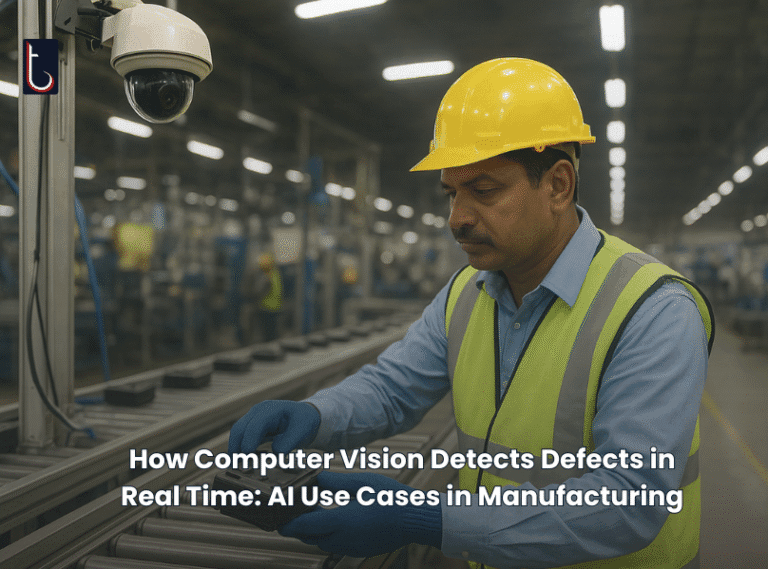
AI-powered computer vision systems address the compliance gap by converting existing camera feeds into continuous monitoring infrastructure. Rather than replacing supervisors, these systems extend their reach, providing automated oversight across every camera-equipped zone in the facility.
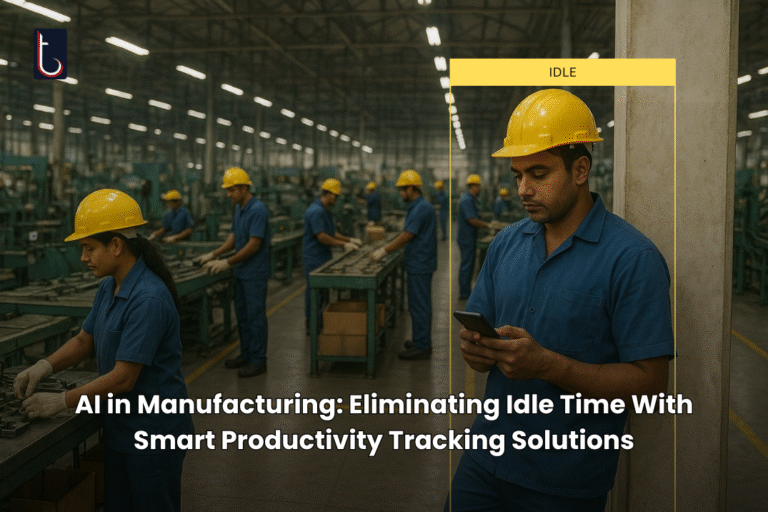
Computer Vision for Real-Time Activity Tracking
Deep learning models trained on manufacturing-specific datasets can recognize whether workers are performing tasks in the prescribed sequence. By analyzing body positions, hand movements, and interactions with tools and machinery, the system determines whether the observed activity matches the expected SOP for that workstation. Deviations are flagged immediately, allowing supervisors to intervene before the deviation leads to a quality or safety incident.
PPE Enforcement
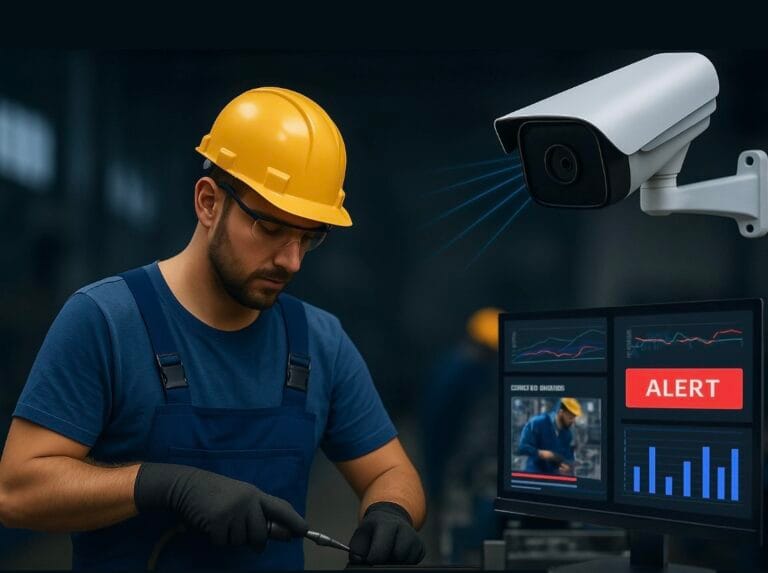
Object detection models identify whether workers in specific zones are wearing the required protective equipment. Hard hats, safety goggles, high-visibility vests, gloves, and steel-toed boots can all be detected with high accuracy. The system knows which PPE is required in each zone and flags violations in real time, generating alerts that can be routed to supervisors, safety managers, or even displayed on floor-level warning systems.
Centralized Compliance Dashboards
Data from all cameras and all facilities feeds into a unified dashboard that provides plant managers and corporate safety teams with a comprehensive view of compliance status. Metrics include compliance rates by zone, shift, and plant; trending data showing whether compliance is improving or degrading; and drill-down capabilities that allow investigation of specific incidents. This centralized view is particularly valuable for multi-plant operators who need to maintain consistent standards across geographically dispersed facilities.
Real-Time Alert Systems
When a violation is detected, the system can trigger a graduated response. Minor deviations might generate a log entry and a notification to the shift supervisor. Critical violations, such as a worker entering a confined space without a harness, can trigger immediate audible alarms, lock out equipment, or initiate an emergency protocol. The response is configurable per zone and per SOP, ensuring that the severity of the alert matches the severity of the risk.
Deployment Scenario
A typical deployment begins with a pilot in a single high-risk zone within one facility. Existing cameras are connected to edge computing devices running the AI models. The SOP for that zone is encoded into the system as a sequence of expected activities and required equipment. During the pilot phase, the system runs in observation mode, logging detections without triggering alerts, to validate accuracy and calibrate thresholds.
Once the pilot demonstrates reliable detection with acceptable false-positive rates, the system transitions to active alerting. Expansion to additional zones and facilities follows the same pattern: encode the SOPs, validate detection accuracy, then activate. The modular architecture means that each new zone can be brought online independently without disrupting existing monitoring.
Business Impact and ROI
The financial case for AI-powered SOP compliance monitoring rests on several quantifiable outcomes. Safety incident reduction is typically the most immediate and measurable benefit. Facilities that implement continuous PPE monitoring and activity tracking report significant reductions in recordable incidents, which directly reduces workers' compensation costs, regulatory penalties, and production downtime from incident investigations.
Quality improvements follow from more consistent process adherence. When workers perform tasks in the prescribed sequence with the correct tools, defect rates decrease. The cost of rework, scrap, and warranty claims drops accordingly. For manufacturers in regulated industries such as pharmaceuticals or food production, compliance documentation generated automatically by the AI system can substantially reduce the labor cost of audit preparation.
Operational efficiency gains emerge as supervisors spend less time on manual compliance checks and more time on value-added coaching and problem-solving. The data generated by the system also supports continuous improvement initiatives by identifying which SOPs are most frequently violated, suggesting that the procedure itself may need revision or that additional training is required.
Conclusion
SOP compliance in manufacturing has always been a problem of scale. The procedures exist, the training is provided, but consistent enforcement across every shift, every zone, and every facility has been impractical with manual methods alone. AI-powered computer vision changes the economics of compliance monitoring by making continuous oversight feasible. The technology turns existing camera infrastructure into an automated compliance layer that operates around the clock, providing the consistent enforcement that SOPs require to deliver their intended benefits.